
Neck
Neck
Click on the body parts or the list below to find out more about your pain and how physiotherapy in [all-and-town][state-name] can help.
- Herniated or Bulging Disc

What is a Herniated or Bulging Disc?
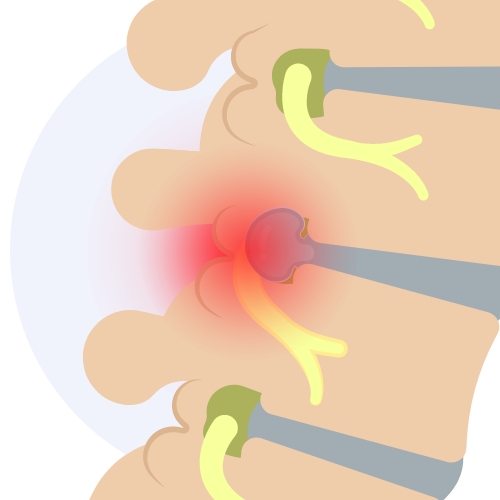
A disc is a jelly-like, fluid-filled sac that acts as a cushion between the bones of your neck (vertebrae). Your discs change as you age, drying out and becoming more brittle. In addition, as the discs dry out with age, the change in height between the vertebrae decreases, causing changes in posture and function. In younger adults, the center of the disc (nucleus) is held in place by many rings of the disc (picture a cross-section of a tree trunk). With minor or major injuries, poor posture, and strain, these rings can rupture allowing a pressing outward of the disc nucleus. Finally, as the nucleus reaches the outer edges, the disc can begin to bulge, which in turn can rub and irritate nerve roots exiting your spine.In more severe cases, the disc can become herniated, which further presses into the spaces where nerves are exiting. Symptoms can range from localized pain to numbness/tingling in a specific part of the shoulder, arm or hands. In more severe cases complete lack of sensation, muscle weakness, and paralysis of an area of the upper extremity can occur.
Changes in posture, strength, and range of motion can all affect the positioning of the disc and how much bulging or herniation is occurring.
How physiotherapy helps
The good news is that the majority of bulging and herniated discs can be treated conservatively with physical therapy. By working with your medical history, symptoms, and testing, our physiotherapists can determine what areas have been affected.A thorough plan is then created to relieve pressure on the disc by improving joint function, muscle strength, and posture. Modalities, such as ultrasound or electrical stimulation may be used to reduce pain, muscle spasms, or inflammation. Our therapists work with you to recover lost strength and range of motion. In addition, we then train you on the correct exercises to maintain good posture and reduce the risk of future episodes. Call us today to discover how we can help relieve your pain quickly and restore your function!
- Vertigo and Dizziness
About Vertigo
Vertigo and dizziness can be the result of a variety of different factors. Vertigo or benign paroxysmal positional vertigo (BPPV) can occur because of calcium crystals that form in the inner ear labyrinth canals. These canals give feedback about balance to your brain.About Dizziness
Dizziness can occur for a variety of reasons, including issues with medication. Issues with mobility of the neck joints and muscles can also affect dizziness. When this occurs, the major arteries in the neck which supply the back portion of the brain that control balance and orientation can be affected.How physiotherapy helps
Our physiotherapists perform a thorough examination of your balance and vestibular symptoms. We evaluate your visual movements, positioning of your head, neck mobility, and balance. At times, we may need to provoke symptoms to determine the exact mechanism of your vertigo or dizziness.If you are suffering from dizziness and vertigo, you can benefit from physiotherapy intervention to improve symptoms and increase your neck mobility. There are specific vestibular and balance exercises that are performed to settle the calcium deposits in the inner ear and improve your balance system. Call us today to discover how we can stop your vertigo or dizziness and make you feel like yourself again.
- Temporomandibular Joint Dysfunction (TMD or TMJ)
About Temporomandibular Joint Dysfunction (TMD)
Temporomandibular Joint Dysfunction (TMD) describes the problems that may occur at the temporomandibular joint (TMJ). This joint is where your jaw bone attaches to the skull. It is a complex joint that has to slide forward and drop down in order for your jaw to open. It moves thousands of times a day with talking, eating, and any time you move your jaw. The joint has a disc or fluid-filled sac within it and has many ligaments and muscles that coordinate movements.The TMJ relies heavily on proper posture and alignment to function well. The posture and positioning of the neck and head play a large role in the pulls of muscles on the TMJ. Abnormal muscle pulls can lead to altered movement of the TMJ and thus pain.
How physiotherapy helps
Physiotherapy helps TMJ suffer in a number of ways. Our therapists work with you to determine the exact mechanisms of your TMJ and where you have poor alignment of the TMJ, neck, and head. By improving posture, movement, and function, the normal muscle balance and movement of the TMJ can be restored. Call us today to discover how we can help relieve your pain quickly. - Poor Posture and Forward Head Syndrome
What is Forward Head Syndrome?
Forward head syndrome is extremely common in today’s society and describes a condition where, due to changes in posture, the head juts forward actually shortening the neck. This can be mild or severe and is affected by different factors such as type of work, age, arthritis, and genetic factors.Due to prolonged sitting, poor posture with work, working at a computer, sitting at home in poor posture watching TV, and a host of other common poor postures, changes in your spine can occur over time. Think about how much time you spend looking into a screen and hunched over a desk. The 10–12 lbs of your head are pulling forward on your spine.
Over time, the normal curve in your neck reduces, the length of the spine decreases and muscles in the neck become weaker. This can lead to a variety of symptoms from neck pain, to headaches and even impinged nerves radiating pain into the upper extremities.
How physiotherapy helps
Physiotherapy works in a variety of ways to improve your posture and actually change your neck posture over time. With hands-on therapy, stretching, special exercises, and postural re–training, our physiotherapists work with you to improve your posture, alignment and neck strength. In addition, we train you on proper postural positioning and techniques to adapt your work and home areas to reduce the strain on your neck. Call us today to discover how we can help quickly reduce your neck pain and improve your posture! - Whiplash
What is Whiplash?
Whiplash can occur in many different accidents, but is often seen in motor vehicle accidents. The weight of the head and spine is whipped back and forth with the fast movement of an accident or fall. The muscles in the neck don’t have time to react and the harsh forces, strain, rip, and tear muscles, ligaments, and other tissues. In severe cases, fractures can occur in the bones of the neck (vertebrae).Due to the shock and trauma initially from an accident, pain may or may not be present. Whiplash typically feels worse 1–2 days after the injury as inflammation sets in and tissues become swollen. This can lead to headaches, pain with movement and even numbness/tingling in the upper extremities.
Often, people can have long-standing weakness of the neck muscles, leading to future problems, if their whiplash is not fully treated. Strengthening and postural exercises are very important to maintain stability in the neck after a whiplash injury.
How physiotherapy helps
There are different phases or treatments to help you after suffering whiplash. Our therapists will work with your physician on the appropriate treatment to help you recover and relieve your pain. At first very gentle hands-on therapy, massage, ultrasound and electrical stimulation may be administered to relieve the pain and gently help swollen tissues recover.Gradual progression is then made by restoring the range of motion and beginning very gentle exercises. As you progress, the pain reduces and your range of motion improves, strengthening and postural exercises will be introduced to help you have a full recovery. It is very important to continue with the recommended treatment plan of your therapist to achieve a full recovery and prevent future problems from occurring. Call us today to discover how we can help you relieve your whiplash pain quickly and make a full recovery.
- Neck Pain

Neck Pain
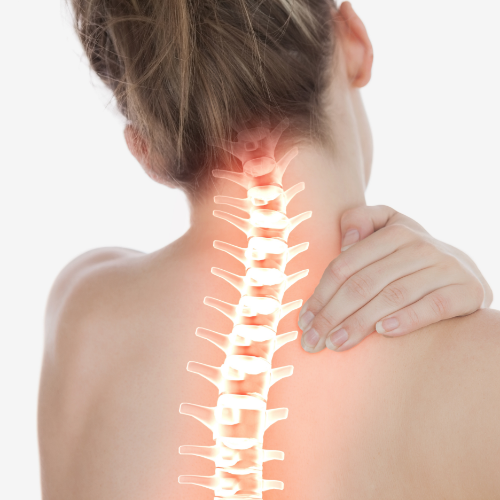
There are many different reasons for neck pain. The neck requires good alignment, proper movement, strength, and stability to work correctly. The neck or cervical spine has to bear the weight of the head, which is around 10-12lbs (the weight of a bowling ball). With injury or prolonged poor posture (for example, sitting at a computer), changes in alignment, weakness, and instability start to occur. This irritates the structures of the neck and can even impinge on the nerves exiting the neck, or the central canal protecting the spinal cord.How physiotherapy helps
Our physiotherapists perform a thorough evaluation of your neck to determine your range of motion, strength, posture, and alignment. Sometimes, where the pain is occurring, is not the source of the problem. Often a limitation in movement above or below the painful area is causing excessive pressure or poor function of the painful area. With gentle hands-on therapy, special exercises and modalities such as ultrasound or electrical stimulation, we can relieve your pain, restore motion, and get you back to activities quickly without neck pain.