
Head
Head
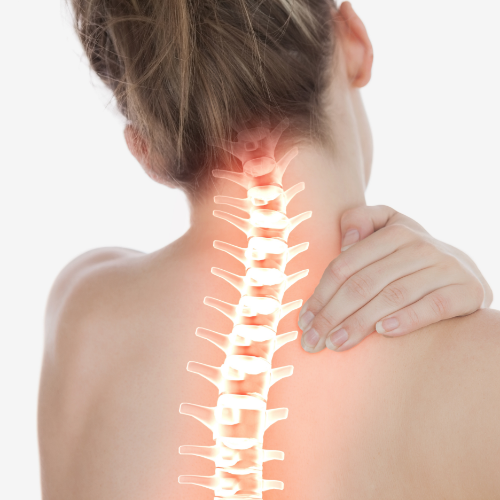
Click on the body parts or the list below to find out more about your pain and how physiotherapy in [all-and-town][state-name] can help.
- Degenerative Disc Disease

What is Degenerative Disc Disease?
As a normal part of the aging process, the fluid-filled discs between our neck bones (vertebrae) dry out and shrink. However, in some individuals, this can be excessive, leading to a severe loss of height in one or more sections of the neck. This loss of height can increase the rubbing of bone on bone, produce bone spurring, and increase pressure on joints and nerves exiting the neck.Symptoms can range from chronic aching pain in the neck to radiating pain in the arms, numbness/tingling, and headaches.
How physiotherapy helps
Physiotherapy is a very important part in the maintenance of degenerative disc disease (DDD) and degenerative joint disease (DJD). While the disease process itself can’t be changed, maintaining good posture, joint mobility, alignment, strength, and range of motion, can reduce or eliminate symptoms and maintain a healthier spine.Our physiotherapy is a great treatment solution to help you feel better and return to normal activities. If symptoms do return in the future, know that we are here to help you resolve your pain quickly. Call us today to discover how we can help you!
- Arthritis and Stenosis
What is Arthritis and Stenosis?
As we age, we use our neck joints and muscles thousands of times a day. This wear and tear over time can lead to bony changes in the joints and bones (vertebrae) of the neck. These bony changes, along with poor posture, cause spurs of bone that can rub and irritate the surrounding tissue.When the spurs protrude in the holes on the side of the neck where the nerves exit out (foramen), or the central spinal cord canal, this is called spinal stenosis. Spinal stenosis can be central stenosis or foramenal stenosis. It can cause a variety of symptoms, from chronic pain to numbness and tingling in the arms. In severe cases of central canal stenosis, which affects the spinal cord, poor balance, pain in the legs and difficulty with walking can occur.
People with osteoarthritis in the neck can experience chronic pain, stiffness, and limited range of motion by turning their heads and looking up. Pain may be worse in the morning or after prolonged sitting.
People with rheumatoid arthritis can suffer from neck pain. It is very important for people with rheumatoid arthritis to maintain strength in their shoulder, neck, and postural muscles. This is because a very important ligament in the upper neck often weakens with rheumatoid arthritis and can be a serious health risk if injured.
How physiotherapy helps
Physiotherapy is very important for neck arthritis. Our physiotherapists assess your range of motion, joint mobility, strength, and posture. From there, we determine the best plan of treatment, which may involve gentle hands-on therapy to restore joint range of motion, massage to improve muscle mobility, strengthening, range of motion exercises, and postural re–training.Our physiotherapists work with you and your physician to restore natural movement, eliminate pain, and get you back to enjoying your normal activities. Call us today to discover how we can help relieve your neck pain quickly!
- Radiating pain
What is Radiating Pain?
If you are experiencing radiating pain to the shoulder, arm, and even hands, the source of your trouble could be your neck or “cervical spine”. The nerves that supply sensation and movement travel from your neck down your arms. These nerves exit from your spine on both sides supplying the left and right sides respectively. Often with poor posture, poor alignment, muscle weakness or injury, the structure of the spine can change. This can lead to a narrowing of the holes where the different nerves exit from your spinal cord, out of the neck to the shoulders and upper extremities. These holes (foramen) depend on the proper alignment and movement of each level of joints in your neck.Symptoms often start off as a mild, occasional tingling to certain areas of the shoulder, arm, or hand. It can then worsen pain and even numbness. This does require medical attention, so call us for an evaluation immediately and we will coordinate with your physician. Most symptoms can be reduced quickly. However, the time it takes to reduce symptoms depends on how long and to the extent the symptoms have been occurring.
How physiotherapy helps
Physiotherapy is an important part of recovery from radiating shoulder, arm, and hand pain. Our therapists work with you to determine the cause of the compression on the nerve structures. Often, there is a limitation in movement in the joints above or below the affected area of the neck.By improving neck joint mobility, posture, alignment, and muscle strength, support and stability can be returned to your neck. This reduces pressure on the affected nerve and allows it to heal, resolving symptoms. Call us today to discover how we can help you quickly resolve your radiating shoulder or arm pain.
- Headaches and Migraines
Headaches and Migraines
Over 45 million Americans suffer from headaches. There are many different types of headaches and migraines from tension headaches, temporal headaches, cluster headaches, migraines, and sinus headaches. While there are many different “triggers” such as alcohol, chocolate, scents, and other factors for headaches and migraines, most sufferers do have some underlying neck problem that causes their headaches. These are called “cervico-genic headaches”.Headaches and migraines are often spasms of the arteries in the scalp or base of the neck triggering a whirlwind of abnormal electrical activity in the brain. This can cause a variety of symptoms depending on where this is occurring in the head. Most headaches are a component of stress. When stressed, our neck muscles tense on a chronic basis, and with supporting our head all day long, become very irritated. Along with other triggers, this can start a headache or migraine. This is why many headache and migraine sufferers have symptoms later on in the day.
How physiotherapy helps
Our trained physiotherapists examine many different factors that can add to the causes of your headache or migraine. They look for correct alignment, posture, muscle strength of the neck, upper back and shoulders, joint movement in the neck, and much more.If there are limitations in movement or strength in the neck or upper back, this will be addressed to restore your normal mobility. This also increases blood flow in the area, reducing the common spasms that can occur. In addition, our therapists will train you on exercises and techniques that you can use to prevent future occurrences.
- Post-Surgery Rehab
About Head and Neck Post-surgery Rehab?
There are many different types of surgeries that are necessary for stabilizing the neck or cervical spine. Common surgeries include “cervical fusion” and “discectomy”. In a cervical fusion, one or more bones (vertebrae) are fused in the neck to stabilize the area. This may be due to fractures or for other reasons such as the removal of a disc between the vertebrae “discectomy”.How physiotherapy helps
After surgery, our physiotherapists work with you and your physician to follow a specific protocol of rehabilitation that reduces pain quickly, improves motion, increases strength, minimizes swelling, and returns you to activities as soon as possible. Call us today to learn more about our post-surgery rehabilitation program.