

Meniscal Tear
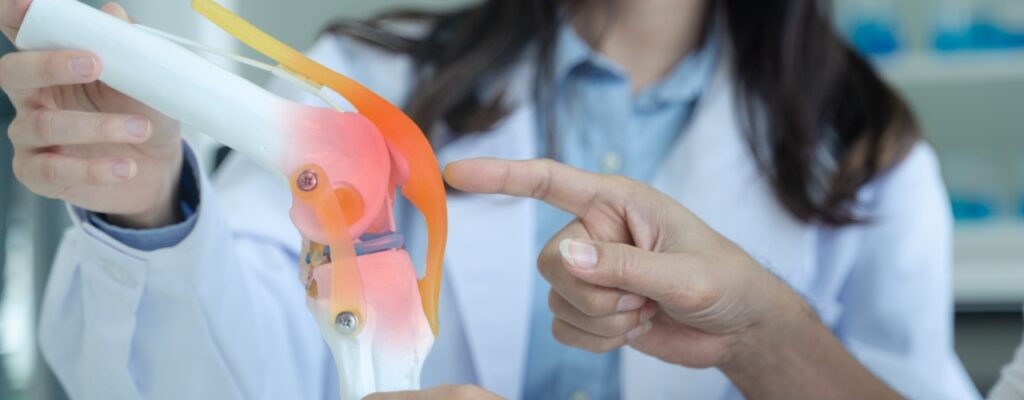
Like most knee injuries, a meniscal tear can be painful and debilitating. In fact, research shows that 12 to 14% of people struggle with this injury.
Meniscal tears mainly occur due to forceful rotation or twisting of your knee, which leads to immense weight on your meniscus. While treating these tears can take time, you can speed up the process by connecting with a physical therapist.
Here at Monarch Physiotherapy Clinic, our skillful physical and massage therapists and physiotherapists help recover meniscal tears by assessing your knee and creating a program with rehabilitation exercises suited to your needs:
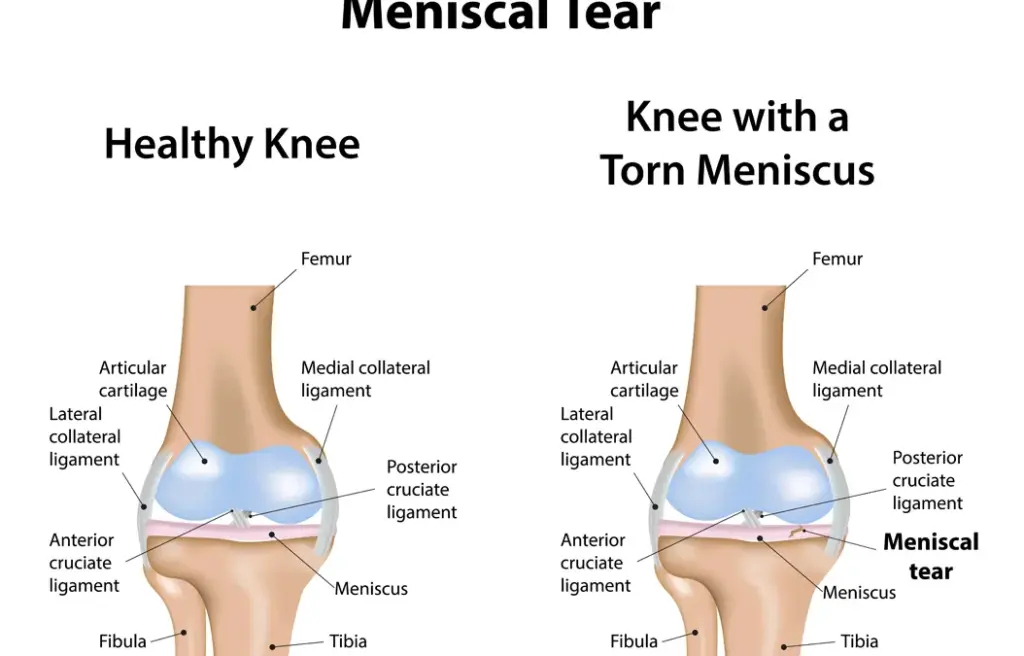
What is a Meniscal Tear?
The menisci are crescent-shaped, rubbery cartilages attached to the shinbone that stabilizes the knee. The thick cartilage protects your bones from wear and tear by stabilizing the knee.
However, a sudden twist or stress can tear the meniscus, causing the cartilage to break loose and catch in the knee joint. These conditions occur in athletes and dancers and require the help of a sports physical therapist to recover.
What Causes a Meniscal Tear?
Meniscus tears develop when the knee experiences a sudden turn or pivots while the foot remains planted on the ground. Sometimes, a tear develops when the meniscus loses resiliency, leading to frayed edges.
As you age, the risk of experiencing degenerative meniscus tears increases. A sprain from falling or an awkward twist when getting up from a chair can cause a tear. If you believe you’ve twisted your knee or have a meniscal tear, you can talk to our professionals at our physiotherapy clinic in Avenida or in Glamorgan and nearby areas.
Besides this, look out for the following signs and symptoms of a meniscal tear:
- Catching or locking your knee
- Difficulty in moving your knee appropriately
- Pain
- Stiffness and swelling
- The sensation of your knee giving way
How Can You Treat It?
There are countless ways to treat a meniscal tear, including:
- Arthroscopic repair- The doctor will insert an arthroscopy into your knee to look closely at the internal knee tissues through a small incision. After that, they’ll carry out a repair of the damaged tissues within your leg
- Anti-inflammatory- Nonsteroidal anti-inflammatory sports medications like Aleve and Motrin can help alleviate pain and inflammation. Furthermore, these drugs can strengthen your muscles by reducing pain
- Stretching Exercises- Try physiotherapy, massage therapy, and light exercise by asking your doctor to recommend you a local physical therapist. Typically, a physical therapist will assess your condition and identify the right physiotherapy exercises to flex and extend your knee and alleviate pain.
At Monarch Physiotherapy Clinic in Avenida and in Glamorgan, our proficient Physiotherapist and massage therapists will help you recover quickly and effectively by teaching you basic exercises to stabilize your knee joint. Talk to our specialists now!
Your Next Steps…
Request An Appointment
Receive A Custom Treatment Plan
Work Hard and Progress In Your Recovery
Recover & Enjoy Life Pain-Free!