

Bell’s Palsy
What Is Bell Palsy?
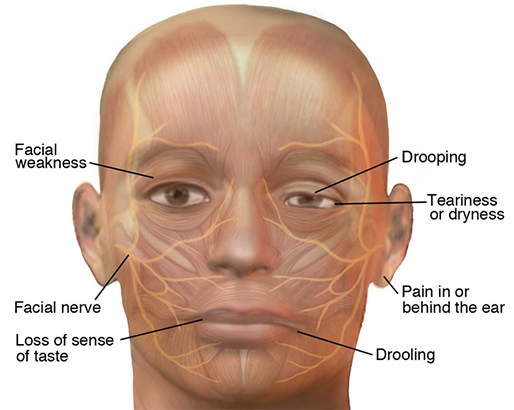
Bell’s palsy is a form of temporary facial paralysis that can affect a person’s daily function, communication with others, self-esteem, and quality of life. It occurs when the nerve that controls movement on 1 side of the face becomes inflamed. The condition often comes on suddenly, causing varying degrees of facial weakness, but begins to recover naturally.
Although the cause of Bell’s palsy remains unclear, it is thought that some cases might be caused by the herpes virus. Other risk factors include pregnancy, obesity, chronic high blood pressure, diabetes mellitus, upper respiratory infections, and severe preeclampsia (a complication of pregnancy).
Facial weakness or paralysis also may be caused by several other conditions including trauma, a congenital (present at birth) condition, surgery, or tumors.
How Does It Feel?
Bell’s palsy usually begins with a sudden weakness on 1 side of your face or a sudden feeling that you can’t move 1 side of your face.
Bell’s palsy can worsen quickly. Other symptoms may include:
- Inability to close the eye on the affected side
- Drooping of the affected side (within a few hours to overnight)
- Teariness or dryness of the affected eye
- Pain in or behind the ear on the affected side
- Sensitivity to sound
- Drooling
- Loss of the sense of taste
- Difficulty speaking due to weakness around the mouth
How Can a Physiotherapist Help?
In the first couple of days to a week after symptoms start, your physiotherapist will evaluate your condition, including:
- Review your medical history, and discuss any previous surgery or health conditions
- Review when your current symptoms started and what makes them worse or better
- Conduct a physical examination, focusing on identifying the patterns of weakness that are caused by Bell palsy:
- Facial movements of the eyebrow
- Eye closure
- Ability to use the cheek in smiling
- Ability to use the lips in a pucker
- Ability to suck the cheeks between the teeth
- Raising the upper lip
- Raising or lowering the lower lip
Your physiotherapist will immediately:
- Educate you about how to protect your face and your eye
- Show you how to manage your daily life functions while you have facial paralysis
- Explain the expected path to recovery, so that you will know the signs and symptoms of recovery
- Evaluate your progress, and determine whether you need to be referred to a specialist if progress is not being made
The first priority is to protect your eye. The inability to completely and quickly close your eye makes the eye vulnerable to injury from dryness and debris. Debris can scratch the cornea—the transparent front part of the eye that covers the iris, pupil, and front chamber of the eye—and could permanently harm your vision. Your physical therapist will immediately show you how to protect your eye, such as:
- Using self-made and commercial patches
- Setting a regular schedule for refreshing eye fluids
- Carefully closing your eye with your fingers
If you have partial facial movement, your therapist will teach you a few general facial exercises to do at home. These exercises will help you learn to move the weak side of your face and help you use both sides of your face together. One of the exercises is a gentle blowing action through your lips.
Your Next Steps…
Request An Appointment
Receive A Custom Treatment Plan
Work Hard and Progress In Your Recovery
Recover & Enjoy Life Pain-Free!