

Tennis Elbow
What is Tennis Elbow?
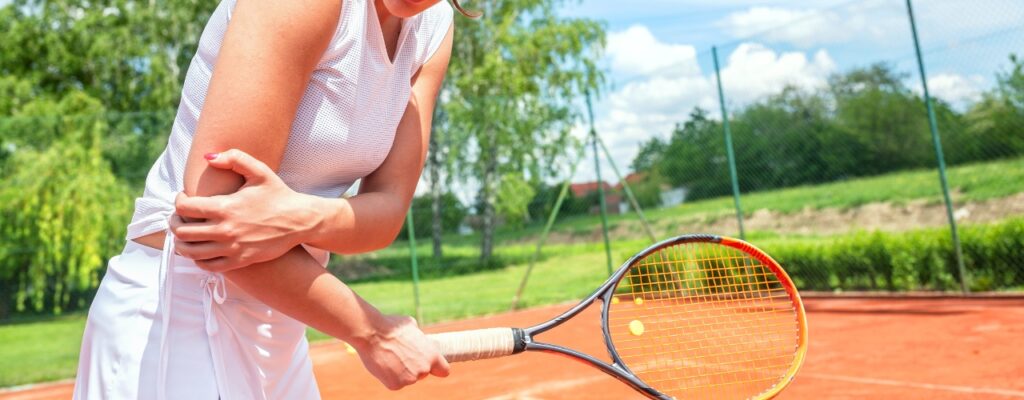
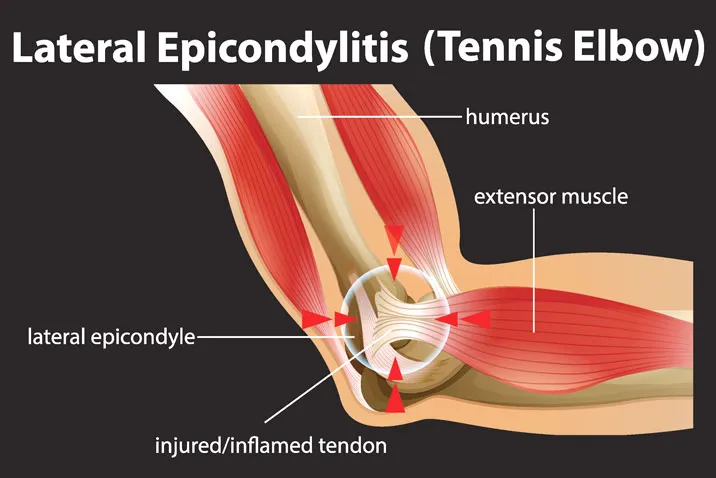
Tennis elbow is an inflammation of the tendons that join the muscles of the forearm to the outside of the elbow. It often occurs due to overusing the forearm muscles and tendons and those around the elbow joint.
Tennis elbow is also known as lateral elbow pain or lateral epicondylitis and is not necessarily related to tennis. However, tennis players often develop the condition because it stems from repetitive muscle use. Half of all tennis players will get tennis elbow in their career.
Tennis elbow is thought to affect between 1 and 3 percent of the population in the United States (U.S.). It usually occurs between the ages of 30 and 50 years.
Fast facts on tennis elbow
- Tennis elbow is caused by small tears in the tendons that join the forearm to the outside of the elbow.
- 50 percent of tennis players will experience tennis elbow.
- Overuse of the forearm with incorrect wrist action can lead to tennis elbow.
- Physiotherapy, support devices, and steroid injections can be used to treat the condition.
- Certain exercises that provide strength to the supportive muscles in the arm and shoulder, such as the Tyler Twist, can help with symptoms.
- Stretch carefully ahead of racquet sports to prevent tennis elbow.
Symptoms of Tennis Elbow
The most common symptom of tennis elbow is recurring pain on the outside of the upper forearm, just below the bend of the elbow. Pain may also be felt further down the arm, towards the wrist.
Pain can occur when the individual lifts or bends the arm. It is also felt while performing basic actions, such as writing or when gripping small objects.
Tennis elbow can cause pain when twisting the forearm. This can be noticeable when turning a door handle or extending the forearm fully.
Treatment of Tennis Elbow
Several treatment methods can be used at home or after consulting a physician.
- Rest: Resting the arm is important. A break in activity allows the tears in the tendon attachment to heal. Tennis players treat more serious cases with ice, anti-inflammatory drugs, soft tissue massages, stretching exercises, and ultrasound therapy.
- Physical therapy: Physical therapists commonly advise that racquet sports players strengthen their shoulder, upper arm, and abdominal muscles. This can help to reduce the wrist extensors during shoulder and arm movements.
- Ice massages and muscle stimulating techniques: These can also help the muscles to heal.
- Strapping or taping the forearm: Supporting the area can help realign the muscle fibers and relieve pressure on the area. A physician may recommend using a splint for 2 to 3 weeks to take the elbow out of action.
- Steroid injection: If symptoms are very painful, and the condition is making movement difficult, a physician may recommend a steroid injection.
After a steroid injection, the person should rest the arm and avoid putting too much strain on it.
- Other conservative treatments: Further options include injections of botulinum toxin, also known as Botox, and extra-corporeal shock wave therapy (ESWT).
ESWT is a technique thought to trigger the healing process by sending sound waves to the elbow. Heat therapy, low-level laser therapy, occupational therapy, and trigger point therapy are other options.
A newly available therapy is an injection of platelet-rich plasma (PRP), prepared from the blood of the patient. PRP contains proteins that encourage healing. The American Academy of Orthopaedic Surgeons (AAOS) describes this treatment as promising but still under investigation.
- Surgery: This may be needed to remove the damaged part of the tendon and relieve the pain in rare cases where nonsurgical treatment does not resolve symptoms in 6 to 12 months. Between 80 and 95 percent of patients recover without surgery.
To prevent further damage to the tendons, it may be useful to wear an arm brace or a wrist splint when using the arm. It can be taken off while resting or sleeping. A physician or physiotherapist can advise about the best type of brace or splint.
Monarch Physiotherapy Clinic in Calgary for treatment of Tennis Elbow.
Your Next Steps…
Request An Appointment
Receive A Custom Treatment Plan
Work Hard and Progress In Your Recovery
Recover & Enjoy Life Pain-Free!