

Five Methods to Manage Plantar Fasciitis
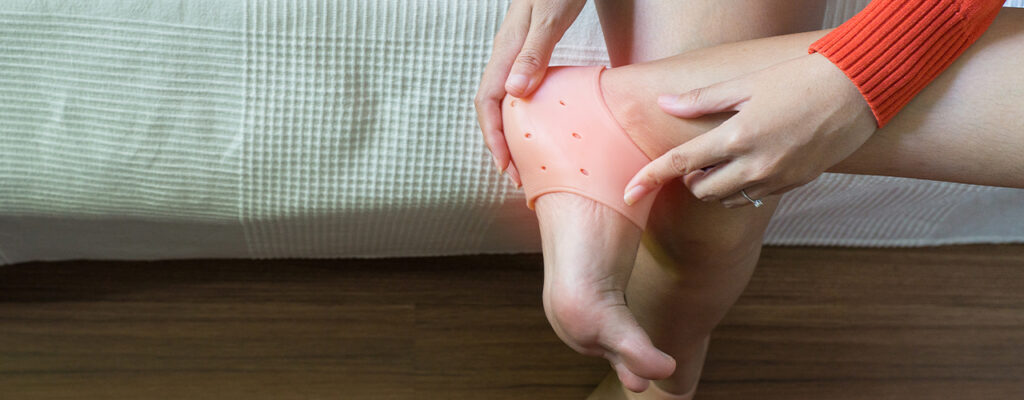
Plantar Fasciitis (commonly referred to as plantar heel pain or plantar fasciopathy) is the most common overuse issue affecting the foot. It presents as pain on the heel and throughout the sole of the foot. It is typically more painful with initial steps in the morning and weight bearing after a period of rest. It is more common in sedentary individuals but can account for 8% of all running-related injuries.
A variety of interventions are used in the management of Plantar Fasciitis (PF). Everything from foam rolling the plantar fascia, to buying orthoses, to losing weight are all advertised as solutions to the problem. A recent systematic review caused some controversy on social media, given that progressive strengthening was not recommended as part of the core management for PF due to the absence of high-quality trials. Instead, stretching, foot taping, and educational interventions were recommended as the core approach as well as load management, footwear, and addressing related conditions such as BMI.
1) Strength training
Spend any time on Instagram, and you’ll probably conclude that strengthening the plantar fascia and calves is the answer for PF. The common narrative is that the load is exceeding the plantar fascia’s capacity to cope, and results in pain. Therefore, increasing their capacity to tolerate more load will reduce the pain over time. Strength training may have become popular in the treatment of PF due to the benefits of heavy slow resistance strength training in tendinopathies and the similarity in symptom presentation. When used in conjunction with education, stretching, and taping, strength training may still be appropriate for individuals who enjoy it or who require a return to sport.
2) Stretching
Stretching has traditionally been recommended as a treatment strategy for PF. This may be due to the reduced ankle dorsiflexion that is common in this population.
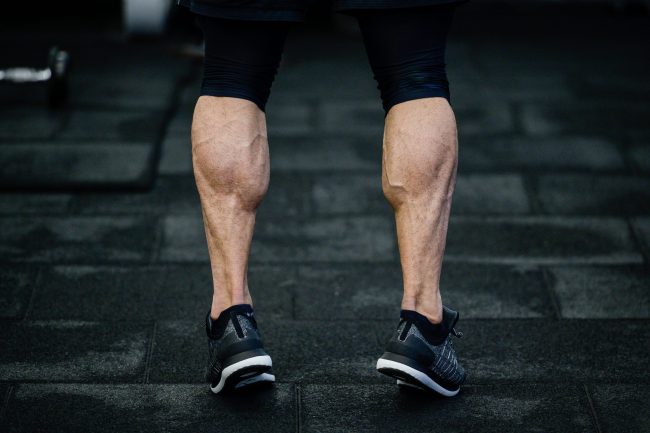
If you’re thinking – ‘’isn’t exercise more of a loading program, not a stretching program?’’ – You’d be correct. One cannot recommend static and dynamic stretching based on a protocol that likely contributed to both lengthening and strengthening of the gastrocnemius. Nonetheless, the systematic review recommended that stretching is ‘’universally applied’’ to all individuals with PF (2). The type, duration, and frequency of stretching should be adapted to the individual.
3) Orthoses/Insoles
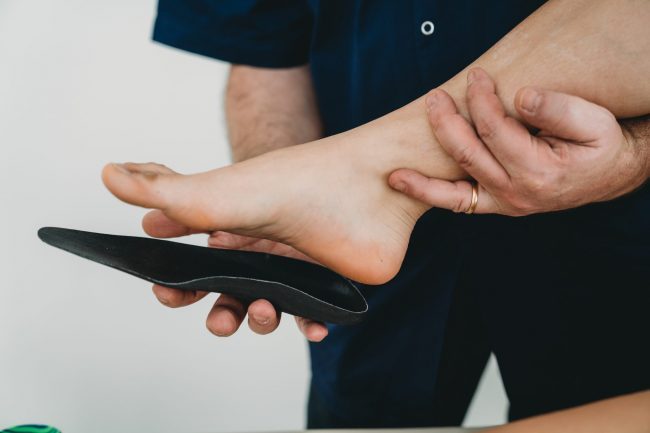
Foot orthoses in the management of PF generate much debate. A podiatrist might tell you they are essential, while a physiotherapist might not even consider them.
4) Footwear
Changing footwear is an easy method to modify symptoms for individuals with PF. However, there is currently no evidence to suggest what the optimal shoe design is to help reduce PF symptoms. A paper delved into by Ian Griffiths sought to determine if maximalist running shoes could be used as part of a management protocol for PF and if they had any measurable impact over standard running shoes.
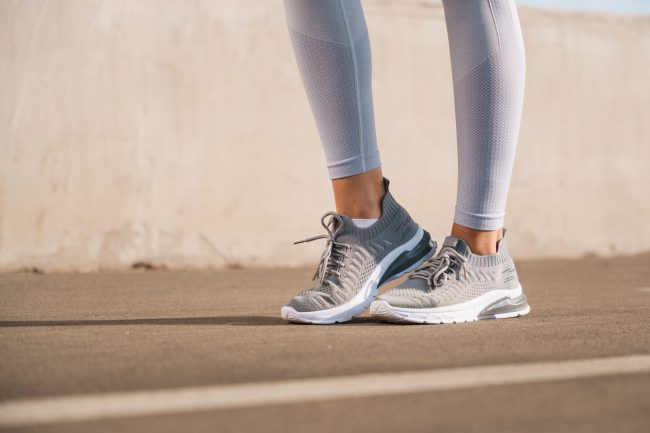
Specific recommendations for the ideal shoe design remain unclear. However, it would seem that addressing footwear continues to be a useful tool to modify symptoms.
5) Injection
Corticosteroid injection (CSI) has been used to treat PF despite there being an increased risk of plantar fascia rupture. It may be wise to consider an injection as a later option if symptoms are not improving with the core management approach prescribed by your physiotherapist.
Wrapping up
This article outlined five methods to manage PF. Topics that are important to consider within the management of PF but not are delved into here, include taping, weight loss, education, and activity modification.