

Golfer’s Elbow
What is Golfer’s Elbow?
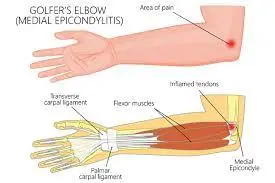
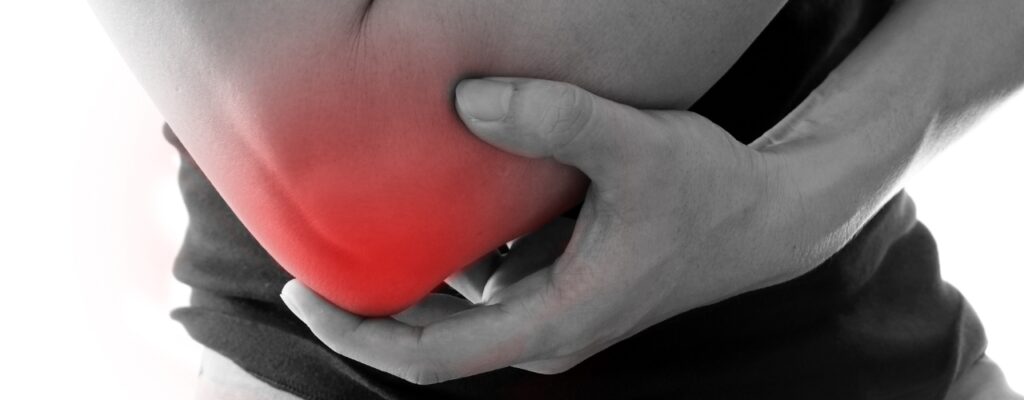
Golfer’s elbow is a condition that results in pain on the inside of your elbow, near the “funny bone” region. It has also been referred to as “medial epicondylitis.” Golfer’s elbow results from cumulative damage and irritation to the tendons that attach to the bony bump on the inside of the elbow. These tendons attach to the muscles that run down the forearm and attach by another set of tendons to the wrist and fingers, allowing you to bend and twist your wrist and grip objects like a golf club, tennis racket, or hammer. Repetitive and forceful gripping and twisting activities can damage the tendons at the elbow. Patients often experience soreness or pain at the inside of the elbow during or after activity.
In some cases, it may become difficult to hold on to things like a golf club or tennis racket. The goal of treatment is to identify and treat the cause (which is usually overuse or poor technique), reduce the pain and irritation, promote healing, and strengthen the muscles and tendons to prevent a recurrence.
Golfer’s elbow is the opposite of tennis elbow, which affects the tendons on the outside of the elbow. Similar to tennis elbow, you don’t have to golf to get golfer’s elbow and this condition affects a wide variety of competitive athletes and active individuals.
Symptoms of Golfer’s Elbow
- Pain and tenderness on the inside of your elbow, in the region of the bony bump. The pain may extend into the forearm. Initially, the pain may only occur following activity but may eventually interfere with activity, as well as interfere with daily activities such as picking up groceries or twisting door handles.
- Stiffness on the inside of your elbow, especially in the morning or after the elbow has not moved for a period of time, such as watching a movie. The stiffness is usually most prominent when the elbow is fully straightened but may also occur when the elbow is nearly bent.
- Weakness of your grip, is almost always associated with pain.
- Swelling is uncommon unless there has been an acute injury.
- Numbness and tingling are also uncommon and do not directly result from Golfer’s elbow. The ulnar nerve (“funny bone” nerve) passes close to the tendons and may also become irritated. This may result in pain, numbness, or tingling shooting into the fingers.
What causes Golfer’s Elbow?
Golfer’s elbow is caused by damage to the muscles and tendons that control your wrist and fingers, in particular the “gripping muscles.” The damage typically results from overuse – excessive or prolonged activity with inadequate rest. In many cases, improper technique during lifting, throwing, and swinging can contribute to increased stress. Poor conditioning, lack of flexibility, and inadequate warm-up prior to activity can also increase the risk of injury. As previously stated, although golfer’s elbow is classically associated with golfing, this condition can occur in individuals participating in racket sports, throwing sports, weight training, and forceful, repetitive occupational movements such as plumbing. A single cause may not be identified in all cases and your care provider will develop a comprehensive treatment program based on their evaluation.
Prevention of Golfer’s Elbow
Although there is no scientifically proven preventative program, most clinicians agree that optimizing strength, flexibility, equipment, and technique in combination with avoiding overuse can potentially prevent the development of Golfer’s elbow. Components may include preventative elbow muscle stretching and strengthening exercises, appropriate pre-activity warm-up, working with a qualified professional to ensure proper equipment fit and technique, and knowing when to rest. In some cases, individuals may benefit from total body conditioning to minimize elbow stress during sports, occupation, or daily life activities.
Contact Monarch Physiotherapy Clinic in Avenida or in Glamorgan for treatment and management of Golfer’s Elbow.
Your Next Steps…
Request An Appointment
Receive A Custom Treatment Plan
Work Hard and Progress In Your Recovery
Recover & Enjoy Life Pain-Free!